Wednesday, November 21, 2012
Saturday, November 17, 2012
Some Stuff I Learned & Read
1. Take a 10-30 minute walk every day. And while you walk, smile; the ultimate anti-depressant.
2. Sit silent for at least 10 minutes each day. Talk to whatever God is for you. Buy a door lock.
3. When you wake up complete, 'My purpose is to____ today. I am thankful for____'
4. Eat more foods that grow on trees & plants and eat less food that is manufactured in plants.
5. Drink green tea and plenty of water.
5a. Eat blueberries, wild Alaskan salmon, broccoli , almonds & walnuts.
6. Try to make at least three people smile each day.
7. Don't waste energy on gossip, the past, negative thoughts or things you cannot control.
7a. Invest energy in the positive present moment.
8. Eat breakfast like a king, lunch like a prince and dinner like a college kid on a budget.
9. Life isn't fair, but it's still good.
10. Life is too short to waste time hating anyone.
11. Don't take yourself so seriously. No one else does.
12. You are not so important that you have to win every argument. Agree to disagree.
13. Make peace with your past so it won't spoil the present.
14. Don't compare your life to others. You have no idea what their journey is all about.
15. No one is in charge of your happiness except you.
16. Frame every so-called disaster with these words: 'In five years, will this matter?'
17. Forgive everyone for everything.
18. What other people think of you is none of your business.
19. GOD heals everything - but you have to ask Him.
20. However good or bad a situation is, it will change.
21. Your job won't take care of you when you are sick. Your friends will. Stay in touch!!!
22. Envy is a waste of time. You already have all you need.
23. Each night, complete "I am thankful for______. Today I accomplished_____."
24. Remember that you are too blessed to be stressed.
25. When you are feeling down, start listing your blessings. You'll smile.
26. When in doubt, start with #1 again. Repeat often.
27. Listen more to your heart, gut and less to your head.


Tuesday, November 13, 2012
Professional Education
There is a science called education.
There is a psychology of communication and information.
There are well tried adult learning tenets.
Medical educators, for the most part, don't know them & don't practice them.
Happy Diwali Fall Festival

सभी मेरी कत्थई भाइयों और बहनों के लिए हैप्पी दीवाली!
For Hindus, Diwali is one of the most important festivals of the year and is celebrated in families by performing traditional activities together in their homes. Diwali marks the attainment of moksha or nirvana by Mahavira in 527 BCE.
Studying and working with many Hindus these past years, Diwali has become part of my Fall Thanksgiving celebration. We should all attain Nirvana and celebrate life and "colors and many sparkles" around us.
Happy Diwali - हैप्पी दीवाली
Gender Regrets

Where I am, medicine is a man's world. It's dominated by male attendings and women who think they are men or have to make pretend they are periodically. So when a female joins the ranks, you tend to notice. Such was the case recently when a new medical student joined rounds with us boys.
There she was, 5 foot something, with curves from her pony tail to her painted toes all reddish-blonde with a cute Southern accent. All the boys made sure they mentored, led, guided and pimped her. She got more attention than the last Krispy Kreme donut in the nurses break room. She remembered kool little factoids about medicine from her recent reading and studying for Step 2 and was sure to walk briskly with the attending so everyone behind could see her, uh, ya...see her. The boys loved it. I didn't get spoken to, pimped or looked at the whole day. I got no new patients and didn't have to present the few I had. There wasn't time. She was there.
So my regret? I regret not being born reddish blonde, 5 foot something, with curvaceous curves, a cute Southern accent and a decent memory for medical text factoids. Maybe my next life?
Thursday, November 8, 2012
Uncertain Certainty

"The problem in medicine is, the body is complex and our knowledge is incomplete. People who want certainty – physicians or patients – are kidding themselves"
The patient perspective is sometimes sobering.
E-patient Dave deBronkart, writing online from the patient's perspective, grabbed my attention with "Expecting Doctors to be Perfect is a Setup for Dysfunction"
And the corollary from the e-doctor perspective is "Expecting ourselves to be perfect is dysfunctional", yet it is the core of performance in post-doctoral training. And with so any being intellectually perfect, the stakes are higher and more significant.
Mr. deBronkart quotes a study involving after death autopsies stating that 10-15% of "cause of death" and "final diagnoses" are actually incorrect. I'm not surprised. We have so much technology but so little real insight into disease particularly when it involves multiple systems. It's not that we don't care, or don't want to do good...we do. But..."the body is so complex and our knowledge so incomplete" that we can't be certain at all.
But the system deals regularly in absolutes, teaches great certainty, extolls the virtues of greater insight into our belief system. It's a mismatch with the true reality of what is. And it's what makes learning in this bad system even worse. I'll go out and do my best today, with the limited knowledge I have, about the complex systems we deal with, and try to make sense of the environment that creates uncertain certainty. At least, I'll certainly try to be as certain as uncertainly possible. Of that, I'm certain.
A Year Inside a Medical Residency
In a recent Atlantic opinion piece, Dr. John Schumann speaks of the sometimes cavalier nature of medical practice and education among new physicians. In the article
Dr. Schumann notes talks about overconfidence and the confidence-knowledge gap present in the early phases of learning.
"This confidence-knowledge gap is normal in medical trainees. Coping with stressful environments like residency necessitates that learners find some element of near-mastery in the early phases, or else the ego can be severely bruised."
My ego was thrashed long ago. I have none left. But the bruising continues.
Wednesday, November 7, 2012
Morphed Discussion, From Here to There
We did it! Moved in one conversation from a city in Texas to Mongo, of Blazing Saddles fame. I think this is how it happened.
Patient has a fungal infection of some type the requires special testing to determine it's species.
There is a great lab in Tyler, TX that apparently is quite good and known for genotyping and/or categorizing such infections for ultimate prediction of best antimicrobial to use on the patient.
Know what else Tyler TX is famous for? Earl Campbell, great football player.
Football players have short "sport" lives. Earl had about 8 years. Most, particularly linemen, get about 3-5 on average.
Know what a linemen made playing football way back when? Under $50,000. Many had to work extra jobs in the off season to maximize year round income.
Alex Karras was a football player who had to work in the off season. He chose acting.
What character did Alex play in Blazing Saddles? Mongo!
So from Tyler TX to Mongo....No wonder rounds take so long to finish.

Tuesday, November 6, 2012
Models Abound Elsewhere

The real bottom line is providing the best care, with the best outcomes to everyone while not spending ourselves, nationally, to disaster. I get that this is not easy, because it's really not. But I see clearly that much of it emanates from antiquated institutional policy providing misguided medical education to poorly chosen future physicians. The system is thick with politics (no matter what you call it) and won't change easily if at all, without strong outside intervention....outside of academics, medical associations, politics and the pharma/insurance mega beast.
What do all the countries who do better have in common? Centralized, one payer medical systems funded by national health taxes or equivalents. They also free institutions and individual physicians from "trying to figure it out daily" and provide a framework for both clinicians and patients to flow into. We need strong reforms in this area in the U.S. and the models in other civilized countries is clear. Not easy, but certainly clear. And they have been doing it for much, much longer than we. Why can't we fast forward, and take back medicine to it's rightful place in society?
Sunday, October 28, 2012
Breast Feeding Public Service Announcement


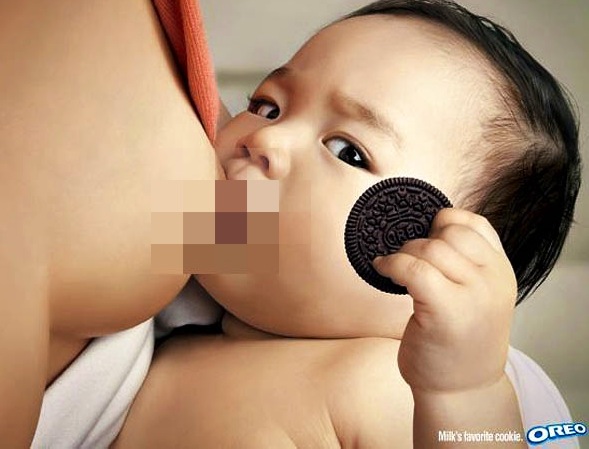
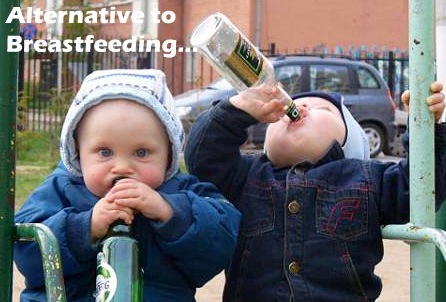
Pose and Strut

Back to studying. I'm sure I'll get pimped about some useless topic on rounds.
Oh hell, I'll just let the overachiever answer it.
Wednesday, October 24, 2012
Bad Rules

He returns to work and tells everyone about the "stolen" scrubs he saw everywhere (We have a anti-stealing scrub device that checks out scrubs to each person by their ID badge)
Decides to forbid all scrubs outside the hospital due to possible infection spread and how would it look to outsiders who get surgery and have seen the scrubs in the outside dirty world (they are mostly unconscious or can't remember who they saw, let alone what they were wearing)
So another dumb rule. Particularly when you see surgeons wearing their horse dung covered boots with no covers into the OR for surgery. It's shocking how retarded this system can be sometimes.
Sunday, October 21, 2012
Just do it!
I am only one, But still I am one.
I cannot do everything, But still I can do something;
And because I cannot do everything,
I will not refuse to do the something that I can do.
I cannot do everything, But still I can do something;
And because I cannot do everything,
I will not refuse to do the something that I can do.
- Edward Hale


Godly Healing
The Catholic Church canonized its first ever Native American today. Kateri Tekakwitha, a Mohawk woman born in 1656 in what is now New York state, died over 300 years ago, but the church attributes miracles to her influence even in the 21st century. She's also famous for many self punishing rituals when she was alive like barefoot walking in the snow, lying on beds of thorns and other such painful proofs of faith.
The commitment to her faith during her life and the miracles attributed to her are one thing, but the way to sainthood is proof of a modern, post death miracle. And most of these historically are medical in nature. Such was the case with Saint Kateri.
In 2006, a boy in Washington touched a piece of Tekakwitha's wrist bone and made a miraculous recovery from a flesh-eating bacteria. How the wrist bone made it out to the boy is one looming question to me, but it was the miracle that pushed the Vatican committee on canonization to recommend sainthood.
In this modern age of science in medicine and evidence based medical practice, it's difficult for many to believe in faith as a way to healing, let alone touching a carpal bone from the wrist of a 17th century woman. I'll leave miracles to the experts in the church who have expertise in this area, among other social permutations, but it's worth rejuvenating regularly the effect of personal faith on individual healing processes and it's possible effect on the bodies ability to heal from illness.
Dr. Christina Puchalski of Baylor University Medical Center wrote an article about this "The role of spirituality in health care" in October 2001 that stimulated my interest in the practice of spiritual connection with patients, irregardless of my own personal spiritual beliefs. You can read the entire article at: http://www.ncbi.nlm.nih.gov/pmc/articles/PMC1305900/ . Dr. Puchalski sensitized me to the need of the patient to connect spiritually with their illness and their ultimate healing, whether they know it or not. She summarized what is involved in serving patients and providing compassionate care -
- Practicing compassionate presence—i.e., being fully present and attentive to their patients and being supportive to them in all of their suffering: physical, emotional, and spiritual
- Listening to patients' fears, hopes, pain, and dreams
- Obtaining a spiritual history
- Being attentive to all dimensions of patients and their families: body, mind, and spirit
- Incorporating spiritual practices as appropriate
- Involving chaplains as members of the interdisciplinary health care team

Friday, October 19, 2012
Confused

I have no clue where to go on the first day, who to report to or what to wear. Sadly, this isn't the first time and more likely the result of a real problem of too many chiefs, too little communication between them and individual "kingdoms" of power, rules and processes that are not easily given up.
Uniform rules? Appropriate training and instruction? Clear failure and success paths? Adult educational theory integration? Humility? Compassion? Recognition of....? Oh never mind. This has been broken for way to long and those in charge don't know it's broke, have no motivation to fix it, and are way to ego inflated to even care.
So we just do what we have to do to survive it, and make sense of it long after we leave with our dysfunctions into the real world. Is it any wonder that the average physician leaves his first job within five years? When you leave residency this messed up about organizations, it's no wonder at all.
So I'll go to wherever the wind takes me on the first day, and I'll likely have to apologize to someone for my error, confusion and hysteria. Better to ask for forgiveness later than ask for help now. And besides the former is way more fun.
Shame! Self-stigmatisation as an obstacle to sick doctors returning to work
I have sick days given to me as part of my physician package of compensation and benefits at work. But I've been warned on a few occasions that using them is tantamount to gross negligence and professional misconduct. Really?
But I see it everyday. Sick, sick clinicians coming to work out of pressure to do so...to man-up (or woman-up) and come no matter what. I'm sure at least one patient has been affected directly or indirectly by a "sick" physician in training.
A small study that looked at doctors returning to work after grappling with physical or mental illness found that those physicians perceived a lack of support from their colleagues in a recent BMJ publication: http://bmjopen.bmj.com/content/2/5/e001776 . The study completely confirms my gut feelings that this phenomenon exists and is a real problem in U.S. medical training programs today.
But even those providers that practice evidence based medicine are unlikely to follow evidence based evidence as to themselves. It's one of those paradoxes in the way we practice and teach the practice of medicine to others.
I guess for the moment I'll man-up and despite my fever, sinus infection, recent outbreak of cavitary pneumonia and pustular rash...I'll go back to work in the AM. Wouldn't want to be seen the weakling among my strong, virile colleagues would I? No worries, I'll wash my hands.
But I see it everyday. Sick, sick clinicians coming to work out of pressure to do so...to man-up (or woman-up) and come no matter what. I'm sure at least one patient has been affected directly or indirectly by a "sick" physician in training.
A small study that looked at doctors returning to work after grappling with physical or mental illness found that those physicians perceived a lack of support from their colleagues in a recent BMJ publication: http://bmjopen.bmj.com/content/2/5/e001776 . The study completely confirms my gut feelings that this phenomenon exists and is a real problem in U.S. medical training programs today.
But even those providers that practice evidence based medicine are unlikely to follow evidence based evidence as to themselves. It's one of those paradoxes in the way we practice and teach the practice of medicine to others.
I guess for the moment I'll man-up and despite my fever, sinus infection, recent outbreak of cavitary pneumonia and pustular rash...I'll go back to work in the AM. Wouldn't want to be seen the weakling among my strong, virile colleagues would I? No worries, I'll wash my hands.
Residency Causes Insulin Resistance
In a small study published Monday in the Annals of Internal Medicine, researchers found that not getting enough sleep hurts the ability of fat cells to respond to insulin efficiently. So sleep isn't only about restoration (real "rest") but also abut cellular function and the processing and utilization of glucose.
We just don't get enough sleep in training. There is no time to actually get restorative sleep when you work 80-100 hours per week. The hospital acknowledges that burnout among nurses is directly correlated with working more than 40 hours per week and monitors that closely. While I thought it was all about quality time with significant others, nutrition, and quality of life, turns out it's also about good sleep.
Fact is, any system of training that includes the hazing phenomenon of decreased sleep and lower quality of life only produces tired clinicians with a propensity to glucose intolerance. It hasn't worked so far to produce great physicians and more importantly may be the prime cause for physicians leaving the profession in record numbers with many remaining very unhappy.
To what extent it is about sleep, quality of life, and other restorative processes is largely unstudied, but I know now that all the fatigue I see around me isn't good for the person, let alone patient care. It's really time to stop the madness that is post graduate medical education in this country. Who knows; With some real effort to reform the system, maybe we'll actually improve the system.
Nah. I hallucinated there for a moment.

Wednesday, October 10, 2012
A Good Dementia

But I have noticed an "imprint" that happens after attending one of these functions for a drug in which I know not other in the class. When I go to prescribe a drug in that class, I can smell the food that was brought, and immediately think of (at least a photo) of the drug or label. So at some level, as hard as I might try to forget or ignore the hype, I may be more prone to wrote for that drug. That's not good.
My Escape Fire is likely to be, no more free lunches or dinners. I might actually lose a few pounds and stave off this metabolic syndrome I'm working toward. Maybe I'll even reverse my low grade dementia.
Tuesday, October 9, 2012
Awareness of Breast Cancer

Almost 40,000 deaths from breast cancer this year.
There are 1600 clinical trials going on in the U.S. for treatments.
5 year survival for localized (no spread) breast CA: 98%
5 year survival for metastatic breast CA: 24%
There are 229,000 new cases of breast cancer each year.
Men get it too...
1 in every 1,000 men will get breast cancer.
2200 new cases of male breast cancer each year.
400 men will die from breast cancer this year.
Monday, October 8, 2012
Too Late
We hardly think about our aging bodies. When they work well, we pay it little mind usually. In fact we often push the limits of our healthy state and operate on the fringe of over stress, high demands and overt body abuse.
And our bodies live in a symptom based medical world. We don't see people in the hospital until it's too late, after the symptoms appear and the ravages of disease have already begun. For those enlightened to prevention, they may be able to stave off disease to some extend, but in the end, our cellular "aging" will determine the health of our cells and our bodies made up of those cells. Only when our bodies stop working the way we expect do we really pay attention.
And then it happens. You wake up one morning and wonder how you got to this point. The arthritis hurts more often. The back ache is more common than not. Workouts are abbreviated by fatigue. The hair is grayer. The skin more saggy. They heartbeat more irregular or even painful. The skin reflects the over use of sun or other products. The wrinkles betray the age our mind thinks we are. The young treat us differently. The old treat us better.
And as the telomerase doesn't work as good and the chromosome shorten, and cells die off into oblivion of youth and health of the past, we start to pay more attention to our aging bodies and begin to try to figure out what we should have tried to figure while we were young.

Dress Code Blue
These ridiculous dress codes with no rhyme or reason have to go. We can't wear scrubs on certain days and in certain venues? Ties are mandatory in certain locations on certain days? Where is the sanity of the rules that have no basis in evidence.
Just the tip of the evidence iceberg: Scrubs were considered most hygienic by patient in a recent study of patient perception. Ties were found to be the most filthy and unrestrained ties increase transmission of infection causing bacteria.
We practice evidence based medicine (mostly).
How about some evidence based dress coding?

Saturday, October 6, 2012
Night Nurses

Friday, October 5, 2012
Days, Weeks like this
Some days, I just feel fetal! Complete with all the signs of regression you might expect. Babbling, drooling and wanting ice cream. It's the end of the pathway of a day usually, when I've been surrounded by savants who have memorized page 167 of Sabiston's or Harrison's in it's entirety...complete with details about the color palette for the diagram on the bottom of the page. I hate those guys. They are such automatrons of medical knowledge. So willing to share great knowledge about this and that study. So able to offer suggestions for care. They just make me feel....fetal.


An Apple a day? Easy!

I'm starting to eat them by the barrel!!
Git 'er dun!

And that my friends is the difference between a good education and a bad one; a good program and a bad one; a healthy training scenario and one filled with anxiety. Because in the end, we all want to do good and git er dun right. It's never a matter of someone wanting to screw up on purpose that I've seen.
With gentle guidance, direction, understandable objectives with failure and success paths understood and compassion nothing is impossible. With overbearing, angry, frustrated, information hoarding direction to "just do it" there is nothing but anxiety, and often, error. It's simple to see, very hard to change a culture that has "done it this way" forever. But then, that's why medicine is in the mess it is, filled with burnt out providers.
Thursday, October 4, 2012
Pink Awareness
There are lots of activities going on around the country, totally unrelated to the elections or the debates. It's about "pink awareness" and a month dedicated to breast cancer and finding a cure. It's also about celebrating life and those who have survived.
In my life, you know who you are (don't want to violate federal privacy laws), and I love you. Fight the good fight!!...for the duck!
In my life, you know who you are (don't want to violate federal privacy laws), and I love you. Fight the good fight!!...for the duck!
http://www.nbcam.org/ National Breast Cancer Awareness Month, October 2012

Wednesday, October 3, 2012
Mi Vida Loca Dots

I don't know what happened, you know. There was this dude. And I just got shot. Ya, I got a job you know. I buy and sell wholesale electronics from the west coast. Need a nice GPS doc? I got one for you later if you fix me up. Drink? Ya, a 40 a night. Hungry? No, I'm good. My old lady is bringing me some drive thru.
Crazy life? It's freekin insane.
If this is the crazy life, give me peace, cool, calm, and collected anytime.
Bowties, cool?

But then, it is a wonderful form of infection control. I can't even imagine what would culture out of one of my clinical long ties that's never been washed. Like the stethoscope, the tie is a wholly neglected item physicians wear that is a cesspool carrier of bacteria, viruses and assorted parasites. So the answer? Ban ties completely. No ties in a clinical setting, ever. Not necessary. Frankly dangerous.
Culturing ties....I think I have my research project for residency.
Tuesday, October 2, 2012
They Do Get Better

The most gratifying experience for me is to see someone progress from completely debilitated, totally dependent on medical care professionals for life and function, to walking out of the hospital better when they came. Having just experienced that, I'm elated to know that for the patient, the system often works just fine. And that is the saving grace of working in this often chaotic field. It's stressful, emotionally draining, taxing on the mind body and spirit at times for those that work in it...but in the end, if the patient benefits and walks out with greater healing than if he'd stayed at home, it's very gratifying.
And so was Ms. H. Mind and body totally dependent on us when we first met almost 3 months ago. And then yesterday, hugged me goodbye and thanked me for my little part in the process called medical care. Then I watched intently as she exhibited the improved function we had sought and worked so hard for.
People really do get better after devastating insults to the body. And that hug...the best feeling I've had in a long, long, long time.
Sunday, September 30, 2012
Abs Suffer

P.S. Not the abs I aspire to get, but since she won Olympia 2012 Bikini, they are worth admiring. And I don't have a belly button ring either. Not yet anyway.
Smoking

And while we are at it, stop all government subsidy of any substance that causes lung cancer, COPD, asthma, stunts growth and makes you smell so badly.
Saturday, September 29, 2012
Sleep
I slept in today for the first time in ages. I feel guilty for getting solid 7 hrs, and I shouldn't.
Sleep is an active process where the brain works to heal the body by producing hormones beneficial for repair and growth.
This is also the time for the brain to consolidate memories of what we studied and learned that day. Rapid Eye Movement Sleep (REM Sleep), which happens in the last part of the night, appears to be associated with learning and memory.
This all just reinforces the mantra that you should be getting eight hours of shut-eye if you want the full benefits of sleep. But those of us who are sleep deprived regularly and take care of patients know this full well and welcome days like today.
Residency doesn't appreciate, acknowledge or care about sleep. Imagine how efficient the system would run if academic medical institutions were filled with NON-sleep deprived people?

Behold, La Differance'
Ok, I admit it. I have a surgical personality and mid-set. It's what I enjoy most in my practice of medicine. I like the doing and the immediate gratification. I like the personalities better. So I have a bias. But I think I've figured out the difference between Surgery and Medicine in academia.
Surgeons do it.
Medicine thinks about it, pre-rounds on it, rounds long hours about it, provides a conference about it, makes a medical student research it and present it on those long rounds or at morning conference, runs the list later and discusses it....then consults surgery to do it.

Lovely

Dear Healthcare Professional;
This is to inform you that during the period blah to blah, blah you may have been exposed to at least one case of active tuberculosis. A case that you were [closely and intimately, crawling all inside his orifices and fluids] has been recently been diagnosed by the country health department and may have not been showing clinical signs and symptoms when you were involved in his/her care. This information is provided to you as a Public Health Service and we would recommend contacting your primary care provider for immediate testing, evaluation and treatment if necessary. If you have any further questions please contact this office immediately at the above number and refer to case #blahblahblah. Thanks very much for the work you do.
[Love] Sincerely,
[Your director of county health department extraordinaire]
LOVELY! How unique to my profession to advised of exposure to the little elongated yellow beast. Let's review. Mycobacterium tuberculosis is a nonmotile (meaning they do not move) rod-shaped bacteria. The common site of infection is the lungs because the bacteria are obligate aerobes, meaning that they require oxygen. The cell wall of Mycobacterium tuberculosis is mostly lipid which contributes to difficulties in staining and dyeing the bacteria for identification. The bacterium is difficult to kill because it is resistant to antibiotics and other treatments. And it loves to dig large caverns of space from normal lung tissue (cavitary) and fill them with gobs and blobs of fluide, semi fluids, pus, sputum and other hairballs.
Lovely. So not only do I work unimaginable hours working for mostly children supervisors with little or know knowledge of adult education or supervision, but I also have been exposed to a bacteria with a passion for my lungs. Poetic.
I'm off today for the first day in over two weeks. I think I'll just focus on the things neglected (besides my health) and go to the gym, shop for food to fill my empty fridge and wash sheets. If I think too much about this bacteria crawling around in my lungs, I'm sure I'll quit and go back to my drive thru job at the donut place. But then I could be exposed to flour or chocolate sprinkle inhalation. Lovely.
Unpredictable variability

But then there is the variability that is nothing but stress, created by the leaders of learning. That stress is caused by unpredictable, variable and ghostly expectations. The ones that largely live n the minds of those guiding the learning. Would it be so damaging to create success paths instead of failure paths at all?
Predictable variability is a God-send.
Unpredictable variability is a night mare
Friday, September 28, 2012
Stand there, just don't do something!

Anesthesiologist to me: Just don't stand there, do something.
10 seconds later
Nurse anesthetist to me: Don't help. Too many hands are just confusing.
I couldn't do anything at that point due to laughter. I think the anesthesiologist needs more coffee.
Pervasive Burnout
Just read "Pervasive Doctor Burnout" Great to know as I start this wonderful field.
http://www.jonbarron.org/natural-health/medical-professionals-experience-work-burnout .
I don't know about the research. It's a little suspect.
I just left a drinking party with a whole room
full of interns and residents in medicine and surgery.
They all were handing their liquor in excess just fine. Happy about nothing mostly.

Monday, September 24, 2012
I'm so sad it's over, it's over

Sunday, September 23, 2012
Wrong stories

Too Easy
I won't do it.
It would be too easy to blast someone who asks for constructive criticism who says she's an expert. She did. Told me she knew everything about the topic we were talking about then asked for my feedback. Really? How open.
The world of medicine is filled with such types. People who will tell you they are open to critique and really constructive critique, who play the game and do the lip service. It's so fake. It's so unhelpful.
I know I don't know anything, so what would I have to contribute anyway?
What a sham. A rock, I'd be. I'd rather kiss a bloody stone, upside down.


Friday, September 21, 2012
Good morning Siri!

Good morning EHRick.
Good morning doctor. What can I help you with today?
Were there any admissions overnight EHRick?
Let me check. Yes, there were 3.
List of diagnosis please.
DKA, post stroke dizziness, and intractable nausea and vomiting.
Any missing documentation?
Yes doctor. Admission orders for #3.
Thanks EHRick. Koolphrase, general admission order set.
Done. He's allergic to PCN, percocet, Norco & asking for morphine.
Thank you EHRick. Please print a census complete with map. And take me past the Starbucks stand please. And report patient #3 to the state narcotic database.
Checking.....I have it. I'll print your map now doctor. Landscape print? Reported.
Landscape print will be fine EHRick. Thanks.
Any calls EHRick?
Yes, your accountant, your lawyer, and your therapist. I've scheduled appointments.
Thanks EHRick. Have a nice day.
You too doctor; Don't forget your list.
And doctor, I've ordered flowers for your Mom's birthday.
Sold!

Tuesday, September 18, 2012
Out of the mouths of babes

Patient said, "you might want to tell your boss [attending] he/she has the bedside manner of a circus clown, goofy smile and all"
Monday, September 17, 2012
HIT Man

And then it happens...a rapid fall in the number of platelets with more clotting than even before you gave the heparin. The patient has HIT...Heparin Induced Thrombocyto(platelets)-penia(too few). The heparin has bound with PF4, joined an IgG, formed a complex and then attacks the platelet...marking it for destruction in the spleen or activating it to clot...what you don't want in the first place.
It's essentially an allergic reaction to the heparin and a good thing to know before you go into the hospital as a patient. It's not a good idea to get HIT!
Saturday, September 15, 2012
Oh no!

I guess things could be much worse, like world destruction, rocks hurling toward me from space, dogs living with cats, mass confusion, madness, mayhem...
Maybe not.
The Most Important

He is a reminder to me every day that even though the business of the hospital is to treat patients, there are many people here who let us do what we do by what they do. Sure the docs, nurses and people in patient are doing the billable work of the hospital, but without the "Sweeper Dudes" and such, we couldn't do what we do. They really create the environment to do this work. They insure the leaks are patched, the air is conditioned, the walls are painted, the spills are managed, the pumps pump, the dispensers dispense and the floors are clean. And for a hospital this size, it's no small task.
I say hi to the Sweeper dude every day. I never forget that he and his comrades create the space, the environment, the world, for me to do what I do.
Leadership

Ideally leaders are forced into position. They take on the role of lead reluctantly with little regard for title or power. They live the idea of bottom up leadership and support, like a bottom foundation, by support, gentle correction and stewardship over those above them...under their lead.
Few have that insight. Even fewer can pull it off.
If force is needed to lead others, it's not leading.
And that is perhaps why medicine is in the condition it is. Too many would be leaders who really can't lead. They create small collections of power and force in groups, departments, programs, and such without really contributing anything to the team at large. Too many egos. Too much struggle for power and control over money, patients, resources, time, rooms, computers...you name it. Little effort to truly lead by example and forge new understanding and territory for the greater good, in service.
I'm so dismayed by this business and the people running it. I'm no expert, and not capable myself of doing what I see needs to be done. I don't have the calling, the brains or the power.
But you don't have to be an expert to see this isn't working. It's just blowing hot air.
So deep

Chasing the little energizer bunny leader is certainly good exercise. So try to keep up, try not to get side tracked by anything as foolish as talking to the patient, coordinating care with other professionals or to answer a question for the family. You might not want to miss the inspirational and deep commentary of the chief or leader. Everything you say is so, so profound.
"This will be on boards". No it won't and if it was, you'd be in violation of the code of conduct for the boards by telling us that. Besides, I'm not taking your boards anyway.
Dr. Stead, Duke, said that academic medicine had too few who actually could teach. Even fewer who could lead. I really thought he was kidding.
Tuesday, September 11, 2012

Monday, September 10, 2012
I suck!

After rounds I found myself alone. Everyone else bolted to their respective roles and responsibilities, leaving me to cover the entire service myself. Not a single word of goodbye, support, guidance or anything remotely looking like team work.
Now that wouldn't be so bad if the service wasn't filled with sick folks, if we weren't on call for new patients, if I didn't have to discharge several patients or if I was even remotely interested in this type of medicine. And more important, I'm not even close to being an expert at this. Frankly, I suck at it.
But there I was. Left alone to fend for myself, with little knowledge of the system, the rules that make little sense, the back up that appears to change like the wind or the practice of this type of medicine. On a good day, there would be 5 total folks doing this work. And there I was. Alone.
I've finally finished the day's work after working for 18 hours. I have to be back at 6 AM, less than 6.5 hours from now. The bed beckons. Retirement screams!
Subscribe to:
Posts (Atom)

 Let us not look back in anger or forward in fear, but around in awareness.
  —
—